
Kelsey Soltysiak, OSU Hood River County Extension Central Gorge Master Gardener Volunteer
I want to make a case: gardening is one of the best activities for children and adults to enjoy together. But before I forget—go ahead and add the Poison Control hotline to your phone contacts (1-800-222-1222). Trust me. More on that in a minute.
My first experience gardening with children didn’t happen at home, but in Costa Rica. Each week, I took a bus to volunteer at a small school. One moment has stayed with me—harvesting and drying herbs together. For me, it became a vocabulary-building exercise; for the children, it was a sensory-rich introduction to the plants that shaped their daily meals. It was simple, but meaningful—proof that gardening connects us across language and culture.
Years later, gardening with my own toddler has become one of my favorite parts of parenting. She will refuse a tomato at the dinner table but happily take bites straight from the garden. There’s something about being outside, hands in the soil, that changes the experience entirely.
Of course, curiosity sometimes leads to unexpected moments. Like the time she popped a mystery mushroom into her mouth faster than I could react—hence the Poison Control number on speed dial. She was fine, but it’s a good reminder that supervision matters when young children are involved.
Still, the benefits far outweigh the risks. Research suggests, time outdoors supports children’s physical and mental well-being (Forest Schools). Even brief contact with soil has been linked to reduced stress. You don’t need a large garden to see those benefits—just a willingness to let kids explore.
If you’re just getting started, herbs are an excellent place to begin. They don’t require much space, can tolerate less sunlight than many vegetables, and grow quickly enough to keep children engaged. Cilantro, in particular, is an easy win this time of year. Its seeds can be sown directly into the soil in spring, and within weeks you’ll have something fresh to harvest. Herbs also connect easily to the kitchen—kids can smell, taste, and help prepare what they grow.
When gardening with kids, it helps to plan for a few extra “pests.” Many gardeners worry about deer or rabbits; I’ve learned to account for an enthusiastic toddler who occasionally “harvests” plants ahead of schedule. Learn to let go of some control and plant a little extra.
Berries are another strong choice for family gardens—and a reliable favorite among kids. Strawberries, raspberries, and blueberries all grow well in our region. Oregon State University Extension offers excellent, research-based guidance on selecting varieties and caring for berry plants (extension.oregonstate.edu/crop-production/berries). For families with constant snackers, everbearing strawberries are often a better choice than June-bearing varieties, which produce all at once.
For those with more space and patience, kiwi berries are worth considering. These smooth-skinned, bite-sized fruits can be eaten whole and deliver a surprising burst of flavor. While they take a few years to produce, mature vines can yield an impressive harvest – up to 100 pounds of fruit!
Ground cherries are another favorite for gardening with kids. Tucked inside a papery husk, each fruit feels a bit like unwrapping a present. They’re easy to grow, sweet, and endlessly appealing to small hands.
Gardens don’t need to be large or perfect to be meaningful. A few containers, a raised bed, or a small patch of soil can become a place for discovery. Give kids simple tools, let them dig, and invite them to help choose what to plant. The goal isn’t perfection—it’s participation.
If you’re looking for a way to get started or connect with other families who share an interest in gardening, consider attending “Read and Grow — A Garden Discovery Workshop for Kids & Families” on May 16 from 11 a.m. to 1 p.m. at the Hood River Library. This hands-on event will feature garden-themed books, interactive learning stations, and practical, research-based takeaways for adults—all designed to spark curiosity and confidence in young gardeners.
If you can’t join us, browse the Food Hero website for more tips and tools for new and long-term gardeners alike.
Gardening with kids isn’t always tidy. Plants will get pulled, dirt will get everywhere, and occasionally you might find yourself calling Poison Control. But it’s also full of small, meaningful moments—shared work, unexpected tastes, and a growing connection to the natural world.
And in the end, that’s what makes it worth it.
Central Gorge Master Gardener volunteers provide free beginning gardening classes and continuing education to home gardeners. For research based information about specific gardening or pest questions, submit your concern online at extension.oregonstate.edu/mg/hoodriver or by phone at 541-386-3343. Home gardeners can also drop off plant or pest samples Monday – Thursday between 9 AM and 4 PM at the OSU Hood River County Extension Service, 2990 Experiment Station Drive, Hood River, OR.
The Central Gorge Master Gardener program is a division of the OSU Hood River County Extension Service. OSU Extension Service prohibits discrimination in all its programs, services, activities, and materials.
OSU Extension Berries, Grapes and Kiwifruithttps://extension.oregonstate.edu/crop-production/berries
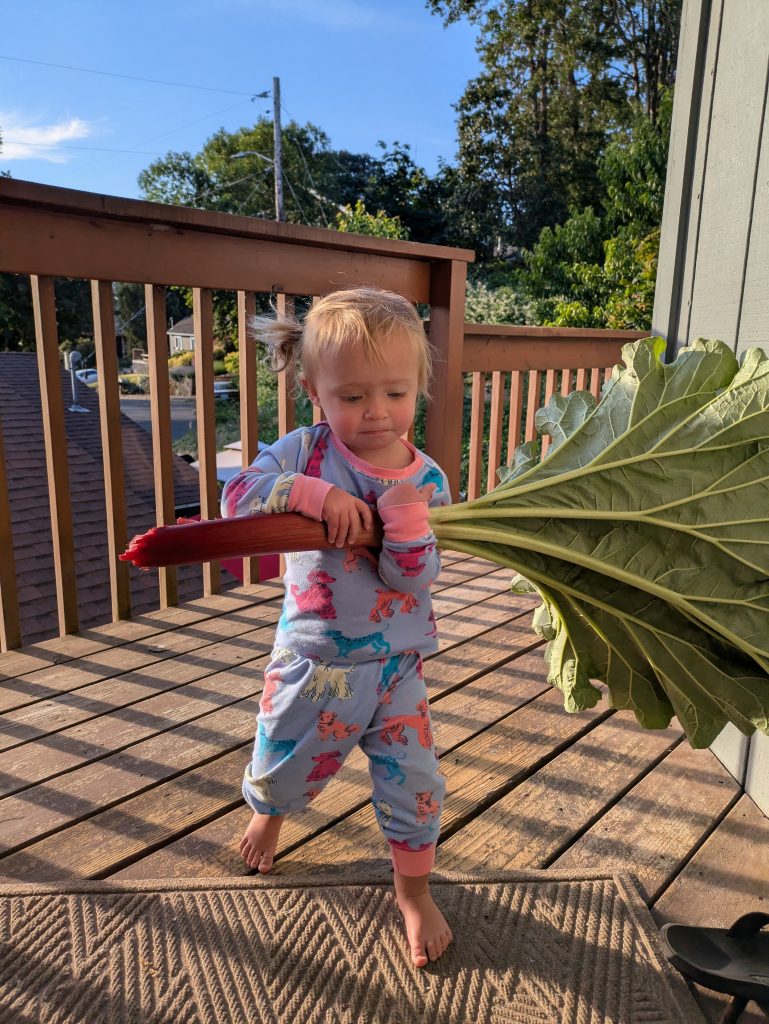
Zosia proudly harvests rhubarb. Photo by author.
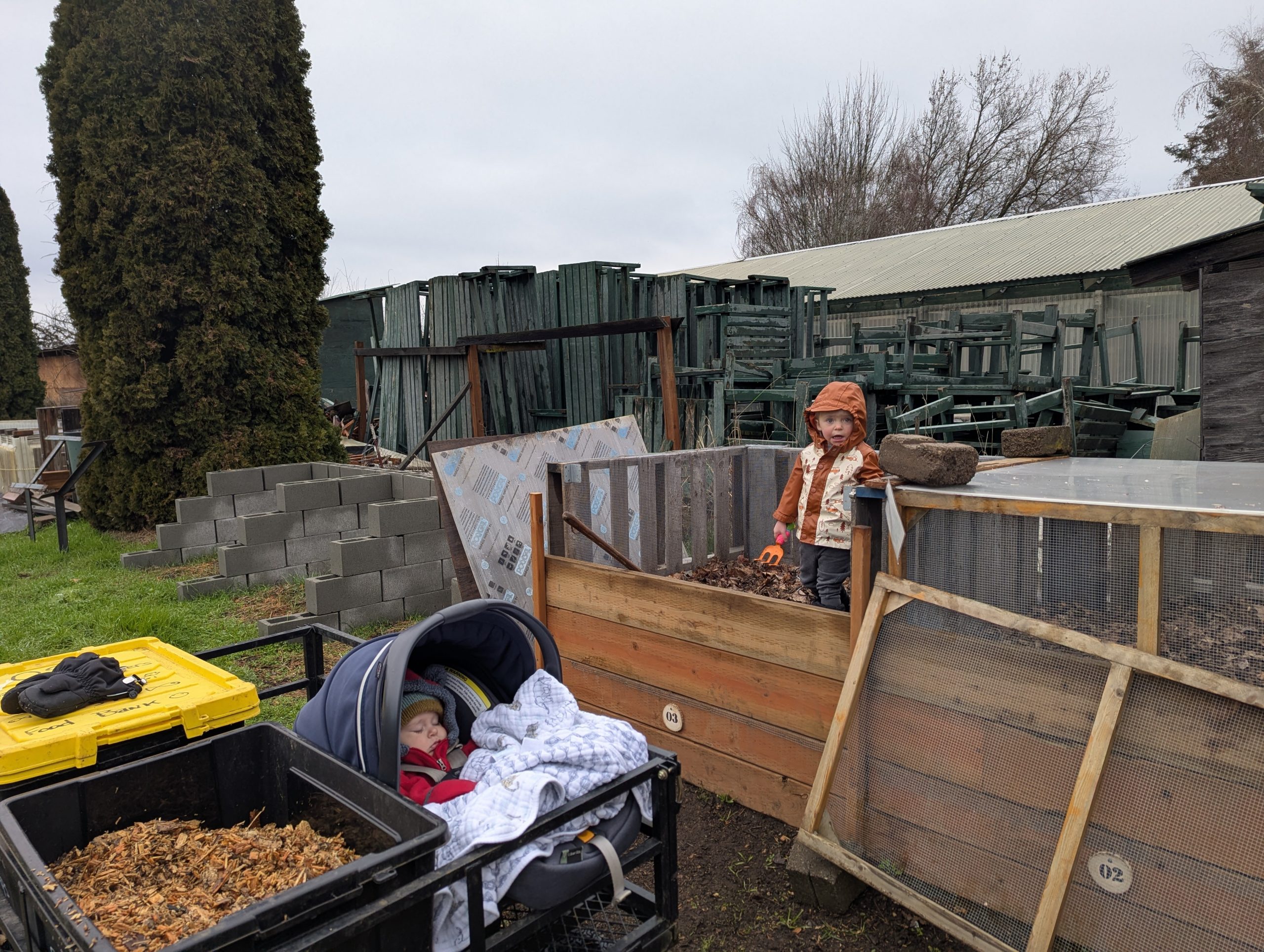
Zosia and Kajetan help tend the compost at FISH food bank.
Photo Credit: Kelsey Soltysiak
Leave a Reply